Drowned Spirits and Sea Monsters: The Folklore Behind Maritime Horror
Sailors have always known the sea keeps what it takes. The folklore they left behind is still the richest vein in horror.
Every coastal culture on earth invented monsters for the water, and they invented far more of them than they ever invented for the land. That imbalance is not random. The sea was the place that took fathers and sons and gave nothing back, the horizon that ships sailed past and did not return from, the dark that began a few feet under the surface and never ended. Folklore is how people explained a thing that refused to be explained, and the sea refused harder than anything else. The result is the richest vein of horror we have.
A graveyard with no headstones
Start with the simple fact under all of it. The sea is full of the dead. For most of history, to drown was to vanish completely, with no body to bury and no grave to visit. A community could lose a dozen men in a night and have nothing to mourn over but an empty stretch of water. That absence is unbearable, and folklore rushes in to fill it.
So the dead do not stay dead. They become something. They linger under the waves, they walk back up the beach, they call from the surf, they crew ships that should have sunk. Almost every sea legend, stripped down, is a story about the drowned refusing to be gone. The monster is usually grief wearing a tail or a shroud.
The creatures and the drowned
The bestiary is enormous, but a few shapes recur across cultures. There are the luring voices, the sirens and their cousins, who use desire to pull sailors under. There are the ghost ships, vessels doomed to sail forever, their appearance an omen of death. There is the figure who collects the drowned and keeps them in the deep, a role many traditions give a name and a locker. And there are the great unseen bodies in the depths, the krakens and serpents, the sheer scale of which is the point.
What unites them is concealment. A land monster has to hide in a forest or a house. A sea monster is hidden by default, because the medium it lives in is opaque and bottomless. You never see the whole of it. You see a wake, a shadow, a shape that submerges before your eyes can resolve it. That partial sight is exactly the engine of dread I described in light and darkness as a mechanic. The sea is darkness that also happens to be wet and alive.
Sailors did not fear the sea because of what they saw in it. They feared it because of how much of it they could never see at all.
Why water frightens us
There is a bodily layer beneath the stories. Humans are not built for water. We cannot breathe in it, cannot see far through it, cannot move fast in it, and cannot tell what is below us. Every advantage we have on land is stripped away the moment we are over deep water. The folklore is the cultural memory of that helplessness.
This is why maritime horror does not actually need a creature to work. A calm, endless expanse of dark water, with the suggestion that something is beneath it, is enough. The fear is the depth itself, and the imagination supplies the rest. The smartest stories know this and keep their monster mostly off the page, a principle that applies just as much to designing a monster you rarely see in a game.
Borrowing folklore well
When horror reaches for this material, the temptation is to grab the creatures. A kraken here, a siren there. That tends to fall flat, because the creature on its own is just a design. What actually carries across is the feeling the old stories were built to express. The sense that the water is owed something. The conviction that the dead are still present. The unfairness of a sea that takes without reason and keeps without mercy.
Borrow the emotional logic and the monster will feel inevitable rather than invented. This is closely related to the difference between folk horror and cosmic horror, two traditions that both thrive at the water's edge for slightly different reasons.
The Mother Below
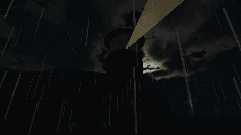
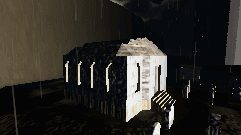
The Lighthouse Keeper draws directly from this well. The threat at Cape Mourn is not a single beast but something older and less knowable, bound beneath the rock, and the drowned that rise with the tide are its reach rather than its whole. The design leans on the oldest version of the fear, the one where the sea is a thing that is owed a debt and has come to collect.
The lighthouse on its island sits exactly where the folklore is strongest, which is no accident, and I wrote more about that in why lighthouses are so unsettling. If the lore interests you, the story page goes deeper, and you are welcome to reach out with questions.