Light and Darkness as a Survival Horror Mechanic
Every player already believes that light means safe and dark means danger. Survival horror turns that belief into a system with a price.
Of all the systems available to a horror game, light is the one the player already understands before they press start. Nobody has to be taught that the dark is where bad things live. We arrive with that wiring installed. A horror designer who understands this is not inventing a fear, they are borrowing one that is already loaded, and then attaching a cost to it. That is the whole trick, and it is one of the most reliable engines in the genre.
An instinct you can borrow
The light and dark instinct is ancient and almost universal. Light meant the fire, the camp, the others. Dark meant the edge of the firelight, the things with better night vision than us, the risk that did not announce itself. Modern players carry that intact. You can hand someone a torch in a game and they will treat the lit cone as a small mobile home, and the area outside it as hostile territory, without being told to.
This is a gift, because it means the designer does not have to spend effort convincing the player that darkness is dangerous. They only have to honour the belief. The first rule of a light mechanic is therefore simple. The dark must actually punish you, at least sometimes, or the instinct decays and the player stops respecting it.
Light needs a cost
Here is the part many games miss. Light with no cost is not a mechanic, it is a setting. If the player can simply keep the torch on forever, the darkness ceases to exist as a pressure and the entire system goes flat. Tension in a light mechanic comes from scarcity, from the fact that staying safe is expensive.
The classic implementation is the draining battery. The torch burns a resource while it is on, and that resource is finite, and refills are out in the dark where you do not want to go. Suddenly the player is making decisions instead of holding a button. Do I light this room or save the charge. Do I cross in darkness to move faster, or in light to see the threat. This is where light design overlaps with resource management, and the two systems tend to reinforce each other beautifully.
Light that costs nothing is wallpaper. Light that costs something is a decision, and decisions under threat are where horror lives.
The total darkness trap
There is a tempting mistake on the other side, which is to make the dark truly black. It seems logical. Maximum darkness, maximum fear. In practice, total darkness is not frightening, it is frustrating. A player who can see nothing cannot anticipate, cannot read the space, and cannot feel the specific dread of noticing that something is wrong. They just feel blind, and blindness reads as a broken game rather than a scary one.
Fear actually comes from partial information. Leave enough light to make out shapes, silhouettes, and movement at the edge of vision. The terror is in recognising that one of those shapes was not there a moment ago, or that the silhouette is the wrong shape for the room. You need a little light to deliver the bad news. Pitch black delivers nothing.
Designing the squeeze
The most elegant light systems create what I think of as the squeeze. The player learns that they can turn the light off to save the resource. Turning it off makes the world darker. A darker world makes the threat harder to track. So the act of conserving safety actively increases danger, and the act of buying safety drains the very thing that keeps them alive.
That loop is self-tightening. It does not need a monster on screen to generate stress, because the player is already negotiating with themselves on every step. Tune the drain rate and the spacing of refills until running low feels like a real decision rather than a constant nag, and you have a system that produces dread for free, all night, without a single scripted event.
The beam in Cape Mourn
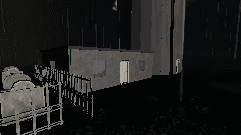
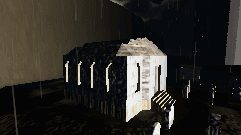
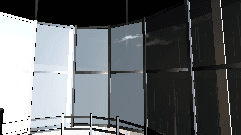
The Lighthouse Keeper takes the light mechanic and makes it the spine of the whole game. The great lamp is your safety and your burden at once. It must be kept burning, feeding it means going out into the storm, and the sweeping beam itself becomes a kind of clock. You move while the light is on your path and you brace for the dark between passes, because that is when the distance closes.
It is the squeeze, scaled up to a building. The thing that protects you is the thing that exposes you, and you cannot have one without the other. You can see how the lamp room reads in the screenshots, and if you are building a light system of your own, I am happy to compare notes.