Folk Horror vs Cosmic Horror at the Water's Edge
One fears the old beliefs that never died. The other fears a universe that never cared. On a lonely coast, the two traditions meet.
Horror is not one feeling, it is several, and two of the deepest run in almost opposite directions. Folk horror looks backward and inward, to old beliefs, rural rites, and a landscape that has not forgotten them. Cosmic horror looks outward and upward, to a universe so vast and indifferent that human meaning simply does not register. They frighten by different routes, and yet they meet again and again on the same ground, the remote and storm-battered edges of the world, which is no coincidence at all.
What folk horror fears
Folk horror is the dread of the old ways. It lives in isolated communities, in customs that predate the modern world, in the sense that the land itself holds a memory and a will. Its fear is not that the supernatural is alien, but that it is local and ancient and was here long before you. The villagers know something you do not. The standing stones mean something. The harvest requires something.
The horror is one of belonging and exclusion. You are the outsider who does not know the rules, in a place where the rules are very old and very serious and were never meant to be broken by a stranger. Folk horror draws directly on real folklore and tradition, which gives it a grounded, almost documentary weight.
What cosmic horror fears
Cosmic horror fears the opposite thing. Not the old belief that is too present, but the vast truth that is too large. Its core idea is human insignificance. The universe is unimaginably old and immense and utterly indifferent to us, and there are forces within it beside which we are less than insects. The terror is not being hunted. It is being irrelevant, and glimpsing just enough of the true scale of things to understand that nothing we value matters.
Knowledge is the trap in cosmic horror. To learn too much is to be broken by it. The protagonist who uncovers the truth does not win, because the truth was never something a human mind was built to hold. The threat does not hate you. It does not even notice you, and that is somehow worse.
Folk horror says the old gods remember your name. Cosmic horror says they never knew it and never will.
Where they meet
For all their differences, the two traditions keep arriving at the same locations, and the coast is chief among them. A remote shore is isolated, which folk horror needs for its closed communities and forgotten rites. It also faces the sea, which is the nearest thing on earth to the cosmic void, vast, dark, and indifferent. A lighthouse or a fishing village at the water's edge is a natural meeting point, sitting between the old land that remembers and the deep that does not care. I get into why that specific image works so well in why lighthouses are so unsettling.
Two different fears
Knowing which fear you are pulling on changes how you build a scene. If the horror is folk, lean on ritual, community, history, and the dread of broken custom. The threat should feel intentional and bound by rules the player can almost learn. If the horror is cosmic, lean on scale, silence, and the wrongness of things that do not obey human logic. The threat should feel vast and uninterested, and understanding it should cost the player something.
The richest coastal horror often blends the two. An old human rite, folk in nature, exists precisely to manage or contain something cosmic in scale. The ritual is small and human and frightened. The thing it guards against is not. That tension between the two registers is where a great deal of the best work in the genre lives.
Blending both at Cape Mourn
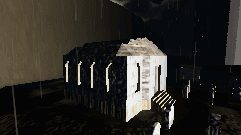
The Lighthouse Keeper sits deliberately on that seam. There is an old order and an old rite, the folk layer, the human custom of keeping a light burning for reasons the keepers themselves half forgot. And there is the thing the rite was built to hold back, which belongs to the other tradition entirely, older and larger than the people who feared it. The chapel and the crypt beneath it speak to the first. The sea speaks to the second. If the genre theory here interests you, the story page shows how the two layers are woven together, and I am happy to talk shop on the contact page.