Why Are Lighthouses So Unsettling? The Psychology of Isolation
A lighthouse exists to keep people safe. So why does the image of one, alone on a rock at night, fill us with dread?
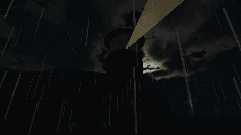
A lighthouse is one of the few structures humans build purely out of care for strangers. It has no commercial purpose at the moment a ship needs it. It simply stands at the worst point on the coast and says, in effect, the danger is here, steer away. So there is something deeply wrong about the fact that lighthouses scare us. The image of a single tower on a rock, its light turning over black water, is a horror staple for a reason. The unease is not an accident. It comes from a stack of real psychological and historical pressures that all meet at the base of the tower.
A building of contradictions
The first source of dread is contradiction. A lighthouse is a beacon of safety, yet it marks the most dangerous water for miles. It is a sign of human presence, yet it is built precisely where humans cannot comfortably live. It promises rescue, but it is staffed by people who are themselves beyond rescue for weeks at a time.
Horror thrives on this kind of doubling. A thing that should mean one thing and quietly means its opposite is far more disturbing than a thing that was always frightening. We are not unsettled by a cave because a cave never pretended to be safe. We are unsettled by a lighthouse because it broke a promise we did not know it had made.
The weight of isolation
Lighthouse keeping was, for most of its history, a job defined by absence. Absence of company, of variety, of escape. Keepers on the most remote rock stations could be cut off for weeks when the weather refused to let a relief boat land. That is not solitude in the pleasant sense. It is confinement with a view.
We understand this in our bodies even if we have never felt it. Extended isolation distorts sleep, mood, and perception. People alone in featureless environments begin to hear things in the wind and see movement in the dark that is not there. A keeper was expected to remain rational and reliable in exactly the conditions that erode rationality. When we picture a figure alone in that tower, we are not only imagining loneliness. We are imagining a mind under slow, grinding pressure, and we are wondering what it might do when it finally gives.
The horror of a lighthouse is rarely the building. It is the person inside it, and the question of what isolation has already done to them.
The sea as the oldest unknown
Then there is what the tower faces. The sea is the original unknown, older in our fears than any haunted house. It is vast, indifferent, and mostly unseen. It takes people and rarely returns them. For thousands of years it was the literal edge of the known world, the place maps gave up and superstition took over.
A lighthouse stands at that edge and stares into it every night. It does not push the dark back so much as outline how much dark there is. The beam reaches a few hundred metres and then stops, and everything beyond that line is exactly as unknowable as it ever was. That tension between the small circle of light and the enormous black around it is the engine of a great deal of horror. It is also, not coincidentally, the engine of a great deal of horror game design, a subject I dig into in light and darkness as a survival horror mechanic.
Fear with a factual backbone
What lifts lighthouse horror above mere atmosphere is that some of it really happened. Keepers really did vanish. The most famous case, the three men lost from the Flannan Isles lighthouse in 1900, left behind a tidied kitchen, a stopped clock, and a logbook full of ordinary entries, and no trace of the men themselves. The official explanation is a freak wave. The explanation never quite satisfies, which is why the story has outlived everyone involved. I tell that story in full in the Flannan Isles mystery.
Real disappearances give fiction permission. Once you know that a lighthouse genuinely swallowed three men and offered no answer, the haunted tower in a film or a game stops feeling like invention and starts feeling like a retelling. The fear has a factual backbone, and that changes how we hold it.
How Cape Mourn uses the tower
All of this is the foundation under The Lighthouse Keeper. The game puts you alone in a tower on a tidal island, on the worst night of a generation, and asks you to keep the light burning. It leans on every pressure above. The contradiction, because your only safety is the very structure that is trapping you. The isolation, because there is no one coming until dawn. The sea, because the dark beyond the beam is not empty.
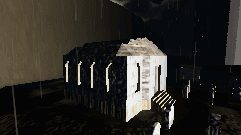
The aim was never to invent a new fear. It was to stand on a very old one and turn the light slowly enough that you start to dread what the next pass will reveal. If you want to see the rock for yourself, the in-engine screenshots show the jetty, the cottage, and the tower as they appear on that night. And if any of this resonates with a project of your own, you can always reach out directly.