How One Person Builds an Atmospheric Horror Game
You do not need a studio to scare people. You need restraint, a single strong idea, and the discipline to test it on someone who does not love you.
Horror is the most forgiving genre for a solo developer, and also the most punishing. Forgiving, because fear is made of suggestion, and suggestion is cheap. You do not need a cast, a combat system, or a sprawling world to frighten someone. Punishing, because the same restraint that makes horror affordable is exactly the discipline most first-time developers lack. This is an honest account of what it actually takes to build an atmospheric horror game alone.
Scope is the enemy
Nothing kills a solo project faster than scope. Every feature you imagine is a feature you personally have to build, debug, and maintain, with no one to hand it to. The instinct is to add. The skill is to subtract. The question that should sit over your whole project is not what else could this game have, but what can this game lose and still be frightening.
A short, dense, terrifying experience finished by one person beats a sprawling masterpiece that never ships. Decide how long the game is, halve it, and accept that the smaller version is the one that will actually exist. Length is not the thing players remember. Intensity is.
One room, one threat, one mechanic
The right way to start is almost insultingly small. Build a single room. Put one threat in it. Give the player one mechanic to deal with that threat. Then test whether that room, on its own, makes someone uneasy. If a single room is not tense, no amount of additional content will fix it, because tension does not accumulate from boredom. It compounds from a strong base.
That base is usually a core loop you can describe in a sentence. For a light-based game it might be cross the dark, manage the resource, avoid the thing. Get that loop scary in one room before you build the second. I wrote about the specific loop I chose in light and darkness as a mechanic.
If your empty room is not unsettling before the monster arrives, it will not be unsettling after, either.
Atmosphere over fidelity
Solo developers cannot win on graphics, and they do not need to. Atmosphere is not fidelity. Atmosphere is lighting, sound, fog, and restraint, and all four are within reach of one person. A scene lit with a few careful pools of light and drowned in good ambient sound will out-scare a beautifully modelled scene that is evenly lit and silent every time.
Spend your effort where fear actually comes from. Cool, low light that leaves the edges of rooms in shadow. A palette that stays muted so the rare splash of colour means something. And above all, audio, which is so important it gets its own piece in the sound of dread. Sound is genuinely half of horror, and it is the half a solo developer can most easily get right.
Make stock assets your own
You will use pre-made assets. Everyone does, and there is no shame in it. The mistake is using them unmodified. Players have seen the popular asset packs, and recognising a stock prop instantly breaks immersion, because it announces that the world was assembled rather than built. Change the textures, re-light them, weather them, place them with intention. A little modification turns a recognisable asset into something that feels native to your world.
Test fear on strangers
Fear is impossible to judge from the inside. You know where every scare is, so you can never be scared by your own game. The only reliable instrument is another person who does not know what is coming. Sit them down, say nothing, and watch. Note the exact moment they stop being tense, because that moment is a bug as surely as a crash is. Somewhere in that stretch, the atmosphere broke, the pacing sagged, or a scare misfired.
Test with several people, because fear is personal, and patterns only emerge across a few playthroughs. The reactions you get in the first ten minutes of watching a stranger play will teach you more than weeks of solo iteration.
How Cape Mourn is being built
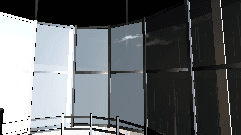
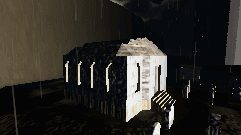
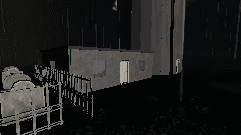
The Lighthouse Keeper is being made this way, by one person, on purpose. The scope is a single night in a single place. The core loop was scary in a test build long before the island was finished. The atmosphere does the heavy lifting, and the assets have been reworked to belong to Cape Mourn rather than to a store page. You can see where that has landed in the screenshots.
If you are walking this road yourself, the hardest and most useful advice is the simplest. Make it smaller, then make it scarier. You can read more about the person behind the project on the developer page, or get in touch directly.