The Sound of Dread: Audio Design in First-Person Horror
Players think they are scared by what they see. Most of the time they are scared by what they hear, or by the moment the sound stops.
Turn the sound off on any horror game and watch it collapse. The lighting still works, the models are still detailed, but the fear drains out almost completely. That simple test reveals an uncomfortable truth for anyone who obsesses over visuals. Sound is not decoration on top of horror. It is at least half of the structure, and in a first-person game, where the player has no external view of themselves, it may be more than half. Here is how to build it.
Half the fear is heard
Vision in a horror game is narrow and forward facing. You see a cone of the world ahead of you. Hearing is the opposite. It is total, surrounds you, and reports on everything you cannot see. That asymmetry is the designer's greatest gift, because almost all dread lives in the space the camera is not pointed at. A perfectly safe corridor becomes terrifying the instant you hear something behind you in it.
This is why a low-budget game with excellent audio can out-scare an expensive one with thin sound. The eyes can be fooled by good art direction, but the ears are the organ that actually triggers alarm, and they are comparatively cheap to satisfy.
The three-layer bed
A convincing horror soundscape is built in layers, not as a single track. Three layers will carry most of a game. The first is a low-frequency drone, somewhere in the 20 to 80 hertz range, felt more than heard, which sits under everything and keeps the body subtly tense. The second is an environmental bed, the diegetic sound of the place itself, wind, distant machinery, the creak of structure, dripping water. The third is occasional, randomised events, a single far-off footstep, a door, a sound you cannot quite place.
Layered this way, the world feels alive and continuous, which matters for one specific reason. A living soundscape can suddenly stop, and that stop is devastating. You cannot take away a silence the player never had.
You cannot frighten a player with silence until you have given them a sound to lose.
Silence as a weapon
The most powerful moment in a horror soundscape is often the absence of one. After a long stretch of ambient noise, cutting suddenly to near silence tells the player, at a level below thought, that something has changed and is about to happen. The body reads the drop in sound as the held breath of a predator. It is the audio equivalent of the room going still.
Used well, silence does the work of a scare without a single asset. It is also the natural partner of good pacing, because it marks the boundary between a valley and the climb out of it. The mistake is to fear quiet. Quiet is not empty. Quiet is loaded.
Making players turn around
First-person horror lives and dies on positional audio. Sounds must come from real points in space, with accurate direction and distance, and they must change correctly as the player moves their head. Get this right and you gain the single most reliable panic trigger in the medium, the sound from behind. Footsteps, breathing, or a drag from a direction the player is not facing produce an immediate, involuntary urge to turn, and that turn is where dread becomes terror.
Attenuation and occlusion matter here too. A sound that muffles correctly through a wall, then sharpens as the player rounds the corner, tells a story about an unseen thing moving through real space. That story is far scarier than anything you could show, which is the same logic behind keeping the monster off screen.
Stingers and restraint
Music is a scalpel, not a blanket. Scoring constant fear is the fastest route to numbing the player, because sustained musical tension becomes background and stops registering. Reserve music. Let long stretches run on ambience alone so that when a cue does arrive, it carries weight. The same restraint applies to stingers, those sharp loud hits that punctuate a scare. They work because of the quiet around them, exactly as discussed in psychological horror versus jump scares. A stinger over an already noisy scene is just more noise.
The storm in Cape Mourn
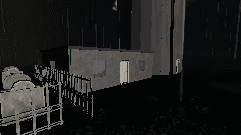
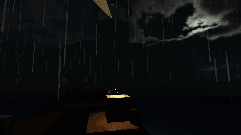
In The Lighthouse Keeper, the storm is a character. The wind, the sea, and the structure of the tower form a constant environmental bed, with a low drone beneath it that rarely lets the player fully relax. The design saves its silences for the moments that matter, and it trusts the dark and the sound to imply far more than the game ever shows. You can get a sense of the spaces these sounds fill in the screenshots, and if audio is your area, I would genuinely enjoy a conversation, so feel free to reach out.