The Slow Burn: Pacing Tension Across a Night of Horror
Relentless terror stops being terror within minutes. Real fear has a rhythm, and the quiet stretches are doing more work than the loud ones.
A horror game that is frightening every single second is, paradoxically, not very frightening at all. Sustain maximum intensity for ten minutes and the player adapts. Their nervous system recalibrates, the constant threat becomes the new normal, and they settle into it the way you stop hearing a loud fan. Fear is a reaction to change, and a flat line has no change in it. This is why pacing, the deliberate arrangement of tension over time, is the discipline that separates a frightening game from an exhausting one.
Horror needs rhythm
Think of fear as a waveform rather than a level. It needs peaks and valleys, and the relationship between them is what produces the effect. A peak is only high relative to the valley before it. Lift the player slowly, let them drop, lift them higher, let them drop again. Over a session that pattern keeps resetting their baseline so that each new peak still registers as a spike rather than as more of the same.
The phases of a good horror loop are familiar. Exploration that lets the player absorb atmosphere. Build-up that tightens the screws. A release, which might be a scare or a reveal. Then a valley to recover, before the next climb begins a little higher than the last. Skip the valleys and the climbs stop meaning anything.
The work the valleys do
The quiet stretches are not filler between the real content. They are the content. A valley is where the player rebuilds the tension that the next peak will spend. It is also where dread does its slow work, because a calm stretch in a game that has taught you calm does not last is its own kind of unbearable. The player spends the valley waiting, and waiting is a more sophisticated fear than flinching.
This is the same principle as silence in sound design. You cannot have a loud moment without a quiet one to measure it against, and you cannot have a scare without a stretch of safety to violate. The valley is the silence. Protect it.
The scariest part of a horror game is usually the five minutes when nothing is happening, because the player knows that cannot last.
Safe rooms and false comfort
The safe room is the genre's great pacing tool, and it is widely misread as mercy. It is not mercy. It is craft. A room where the music softens and nothing can reach you gives the player permission to exhale, which is precisely what makes the next descent effective. You cannot frighten someone who is already frightened to their ceiling. You have to let them down first.
The most cunning designs eventually weaponise the safe room by letting one of them fail to be safe, but that trick only works because every safe room before it kept its promise. Comfort has to be real and reliable for most of the game, or its eventual betrayal means nothing. Handle that betrayal the way you would a major scare, deliberately and rarely, as discussed in dread versus shock.
The escalation curve
Across the whole game, the waveform should trend upward. Early peaks are modest, the threats are partial and implied, and the valleys are generous. As the game proceeds the peaks climb, the safe stretches shorten, and the threats grow more direct, until the final stretch can run hot because the player has been conditioned over hours to feel it. The art is in the overall slope, rising steadily, while still dipping between every beat so each spike retains its bite. Resource pressure helps here too, since a tightening supply economy raises the baseline tension naturally as the night wears on.
One night as a structure
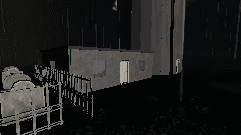
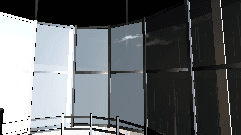
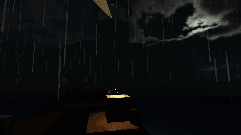
The Lighthouse Keeper uses a single night as its pacing skeleton, which gives the whole arc a built-in clock. The early hours breathe. They let you learn the island and the rhythm of the beam before the pressure climbs. As the night deepens the valleys grow shorter and the dark grows bolder, and the structure carries the player from uneasy quiet toward a final stretch that has been earned hour by hour. A night has a natural shape, a beginning, a worst point, and a dawn, and that shape does a great deal of the pacing for free. If you want to talk structure, my inbox is open on the contact page.