The Uncanny Valley in Horror: A Terror Familiar Yet Foreign
Why do almost-human things chill us to the bone? The uncanny valley in horror explores this disconcerting fear, pulling us into an unsettling experience.
Origins and Concept
The concept of the uncanny valley, first introduced by robotics professor Masahiro Mori in 1970, describes a peculiar phenomenon: as robots and animated characters become more human-like, they elicit feelings of unease and revulsion. This valley represents the dip in comfort levels when confronted with entities that are almost, but not quite, human. It's a space of discomfort and dread, ripe for exploration in horror.
Psychological Underpinnings
Why does the uncanny valley evoke such profound unease? Theories suggest evolutionary psychology plays a role. An almost-human entity might signal danger or disease, triggering primal fears. Others propose it challenges our understanding of what it means to be alive. This disruption of expectations may force us to confront our own mortality and the thin veneer separating life from non-life.
"It's not the darkness that frightens us, but the shadows pretending to be something they're not."
These theories feed into the psychological horror genre, which relies on deep-seated fears and existential dread to unsettle players. Understanding these underpinnings enriches both the creation and experience of horror games, providing a fertile ground for designers to exploit.
Horror Games and the Uncanny
Horror games have long used the uncanny valley to their advantage. Think of the shudder induced by mannequins that seem to move when you're not looking, or the discomfort of encountering NPCs with stilted movements and off-kilter expressions. These elements create a palpable tension, drawing players into an atmosphere where the normal rules of reality don't apply.
The unsettling familiarity of these near-human figures can be far more terrifying than overt monsters. By exploiting the uncanny, horror games weave a subtle tapestry of fear, leaving players to question their perception of reality.
Cape Mourn and The Uncanny Valley
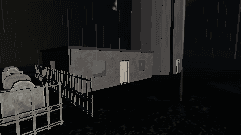
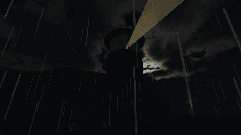
The Lighthouse Keeper, set against the backdrop of the Cape Mourn lighthouse, masterfully employs the uncanny valley. The lighthouse itself stands as a monument to ambiguity, its walls echoing with memories and shadows that move in the corner of your eye. The characters you encounter, both living and spectral, often blur the line between human and otherworldly, enhancing the game's spine-chilling atmosphere. For a deeper dive into this eerie setting, visit our gallery.
These elements not only heighten the tension and fear, but also ground them in a setting that feels both familiar and alien. This duality is at the heart of what makes the uncanny valley so effective in horror games.
Conclusion: Why It Matters in The Lighthouse Keeper
The uncanny valley in horror serves as a bridge between the known and the unknown, tapping into our deepest fears. By crafting encounters that hover on the edge of human recognition, horror games like The Lighthouse Keeper invite players to explore their own anxieties and confront the shadows lurking in their subconscious. To see how this plays out in our game, explore our story page.